Measure jaw opening and reach before you fill a drawer with clamps.
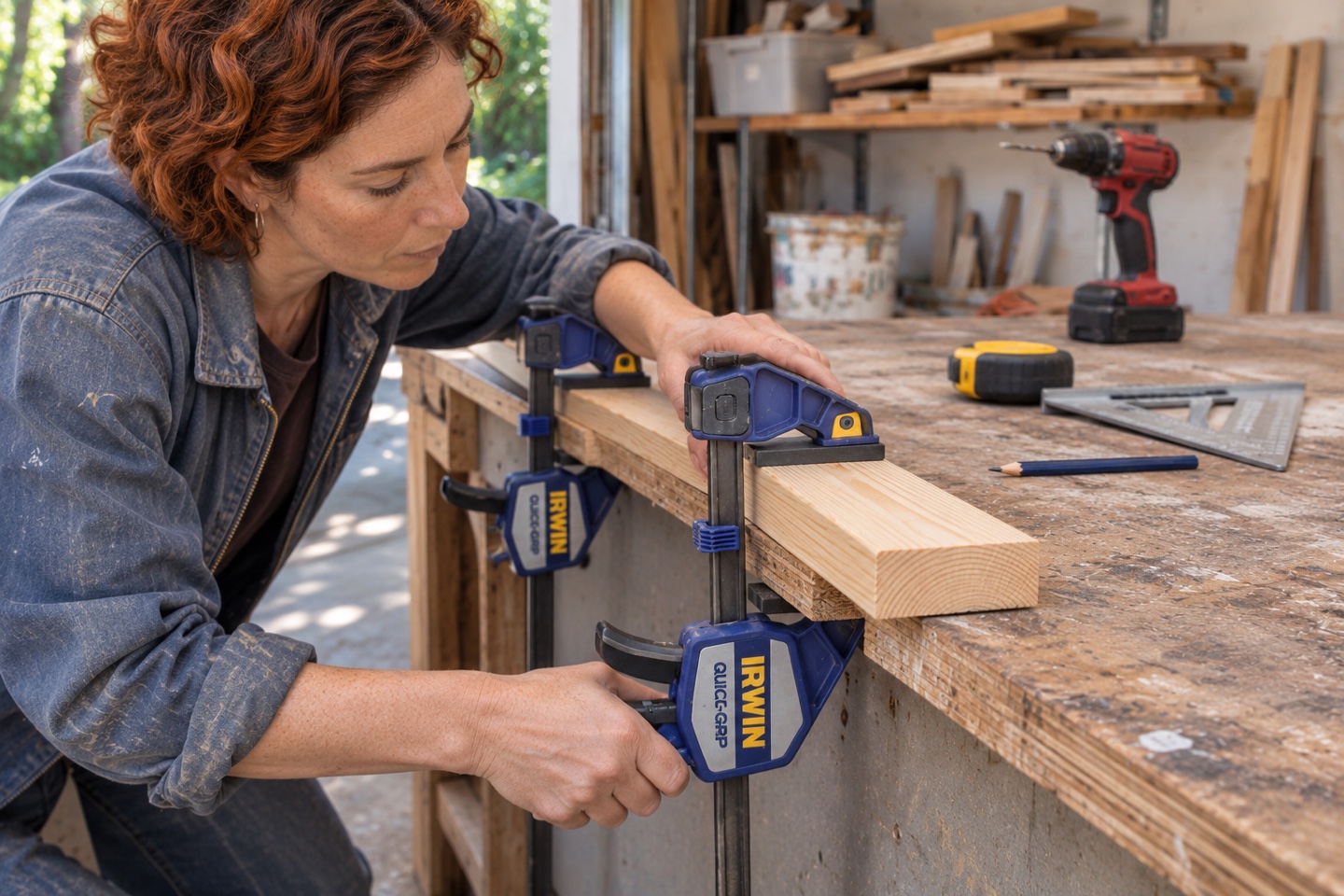
| Measurement | Where to measure | Budget for |
|---|---|---|
| Opening | Top of the stock to bottom of the bench | Both protective pads |
| Throat depth | Bench edge to desired pad center | A clear path past the apron |
| Handle clearance | Under the bench at both clamp positions | Room to squeeze and release |
Measure across the clamping points
Dry-fit the pieces and measure the distance the jaws must span. Add space for any scraps you will use to protect the wood. Compare that number with the usable opening of the clamp.
Measure inward from the edge
Throat depth determines how far from the edge you can place the pads. A clamp may open wide enough and still fall short of the spot that needs pressure.
Start with a pair that fits your usual stock
A matched pair can keep a small glue-up steady, while one-handed clamps can be handy for temporarily holding a piece. Check whether the bars will clear the wall, the underside of the bench, and the tools you need to move around the job.
Work through a bench-edge example
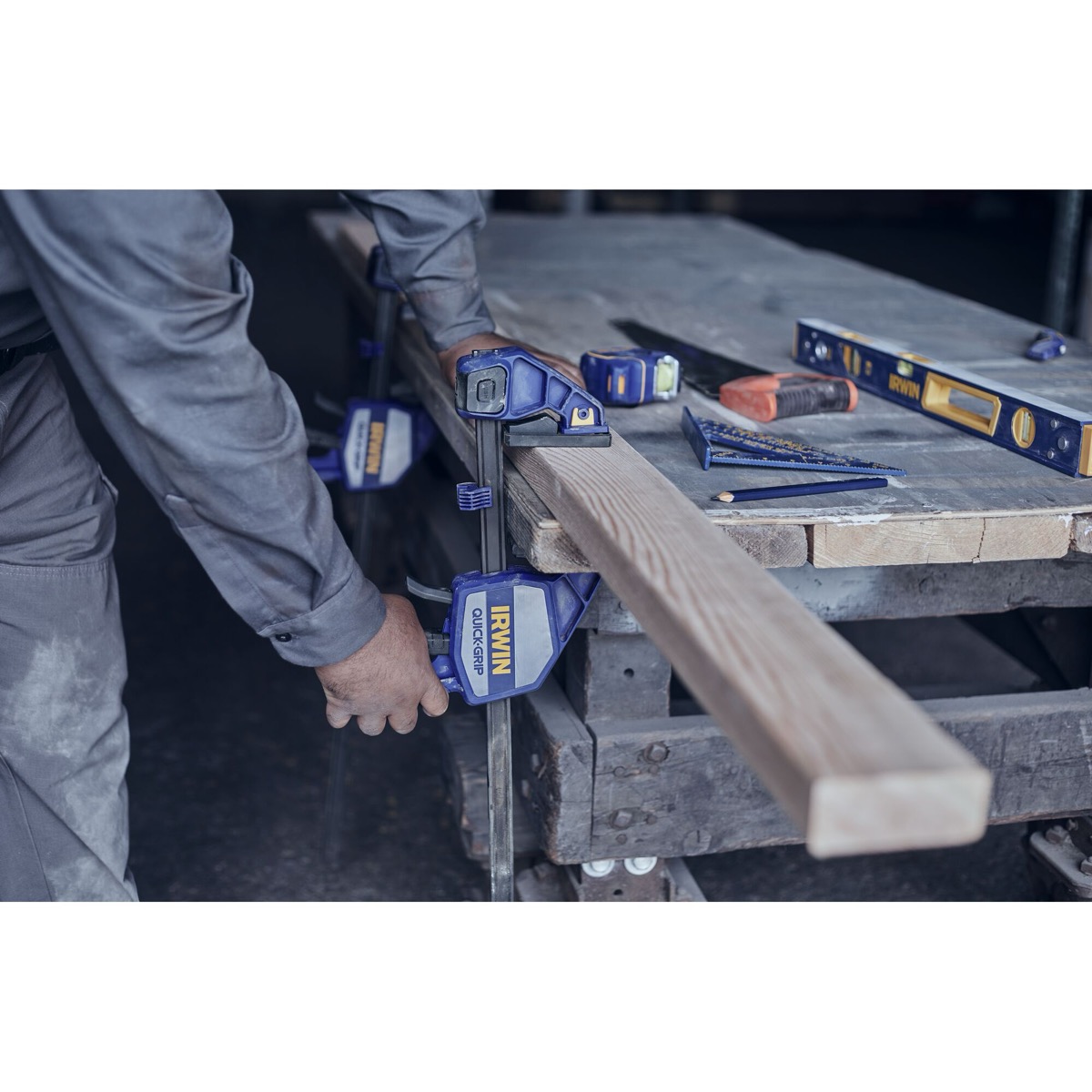
If your bench edge is 1½ inches thick and your stock is ¾ inch thick, the jaws must span at least 2¼ inches before adding scrap pads. If the clamping point is three inches from the edge, the throat must reach that point. Mock up both distances with a ruler while the pieces are dry-fitted.
Set both clamps before tightening
Place one clamp near each end of the stock. Bring both pads into contact, then tighten in small alternating steps while checking for movement. Leave enough room beneath the bench to operate the triggers. Use scrap pads on soft wood when you want to protect its face.
Measure where the jaws will actually land
A thick bench apron can stop the lower jaw even when the board and benchtop fit the clamp’s opening. Hold a ruler perpendicular to the edge at each location and mark where the lower pad can sit flat. If the pad will land on an angled surface, relocate the clamp or use a suitable support.
Do a dry run before applying glue
Bring both jaws into contact and check that their pads oppose each other. Tighten gently from either end, then look along the joint for a raised edge or a sliding board. Stop tightening once the pieces are stable and seated for the operation.